
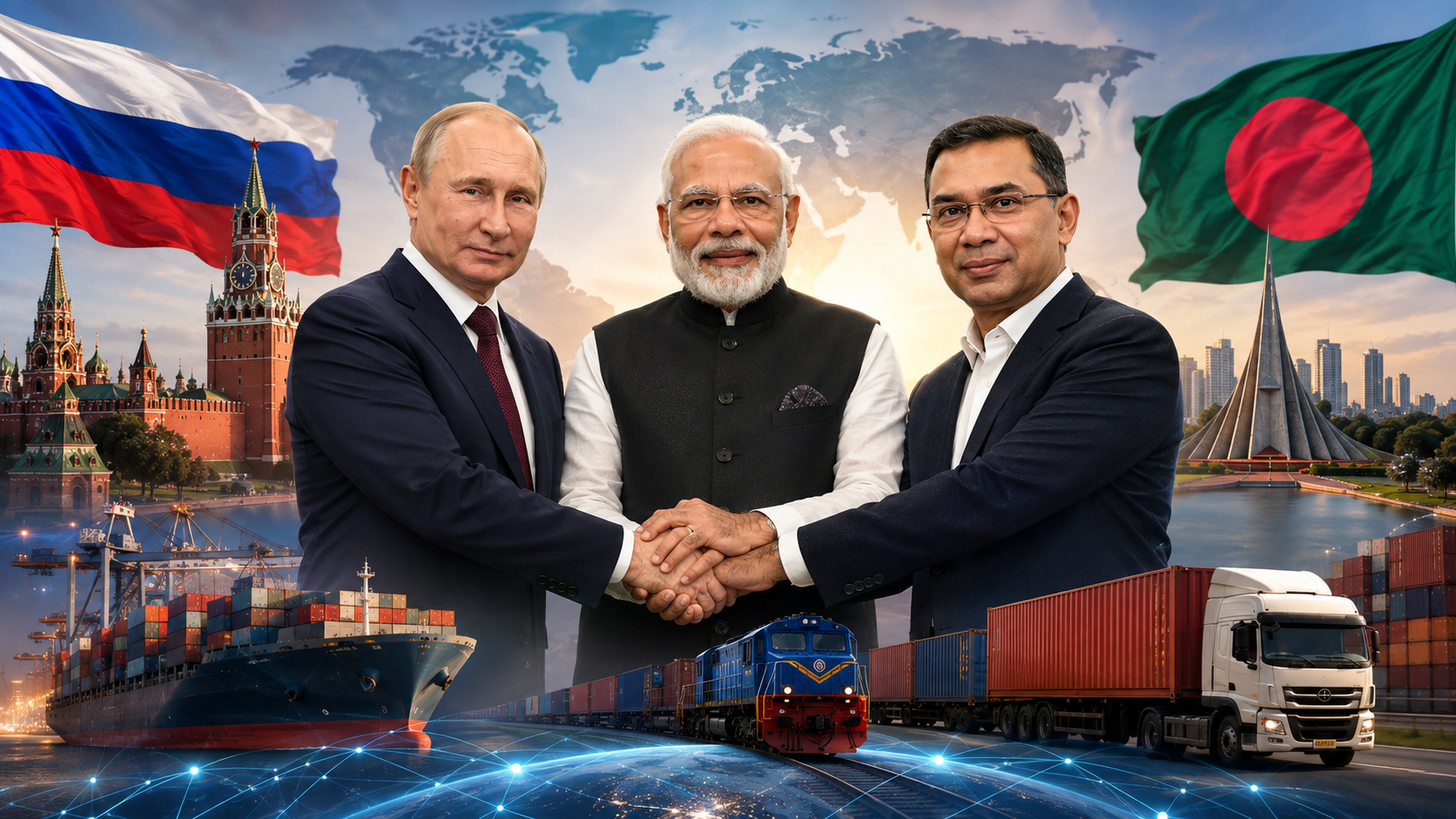
As global trade continues to evolve amid geopolitical tensions and shifting financial systems, countries are increasingly exploring alternatives to the U.S. dollar for international trade. Russia, facing extensive Western sanctions since 2022, has sought new payment mechanisms with its trading partners, while Bangladesh has been looking for reliable and cost-effective ways to continue importing essential goods and completing major infrastructure projects.
One idea that has attracted attention is the possibility of settling Russia–Bangladesh trade in Indian rupees (INR). While such an arrangement has been discussed in policy circles, it has not yet become an established mechanism. The concept raises important questions about regional trade integration, financial infrastructure, and the future of cross-border payments in South Asia.
The Current Trade Relationship
Russia and Bangladesh have maintained diplomatic and economic ties for decades. Their trade relationship has expanded in recent years, particularly in sectors such as:
- Nuclear energy
- Wheat and grain exports
- Fertilizers
- Industrial machinery
- Metals
- Energy cooperation
One of the most significant bilateral projects is Russia’s involvement in the Rooppur Nuclear Power Plant, which is expected to play a key role in Bangladesh’s future electricity generation.
Why Alternative Payment Systems Are Being Considered
Following international sanctions imposed on Russia, many traditional banking channels became more difficult to use for international transactions. Restrictions affecting major Russian financial institutions created challenges for businesses involved in imports, exports, and project financing.
As a result, Russia has encouraged trading partners to explore settlements using:
- National currencies
- Currency swap arrangements
- Alternative international payment systems
- Non-dollar settlement mechanisms
Bangladesh, meanwhile, has sought practical solutions that ensure uninterrupted trade while complying with international financial regulations.
Why the Indian Rupee Has Entered the Discussion
India has expanded the use of the Indian Rupee (INR) in international trade with several countries through special settlement mechanisms. Since Bangladesh has strong trade and banking links with India, some analysts have suggested that the rupee could potentially serve as an intermediary currency in certain regional transactions.
A rupee-based settlement system could, in theory:
- Reduce dependence on the U.S. dollar.
- Lower foreign exchange conversion costs.
- Minimize exposure to currency volatility.
- Improve regional trade connectivity.
- Facilitate faster settlements.
However, such a system would require agreement among governments, central banks, and commercial financial institutions.
Potential Benefits of Rupee-Based Settlement
1. Reduced Dependence on the U.S. Dollar
International trade has traditionally relied on the U.S. dollar. Using the Indian rupee could diversify payment options and reduce dependence on a single reserve currency.
2. Lower Transaction Costs
Each currency conversion adds costs for businesses. If trade could be settled directly or through fewer currency conversions, companies may benefit from reduced banking fees and exchange losses.
3. Faster Cross-Border Payments
Regional settlement mechanisms can simplify payment processing and reduce delays associated with international correspondent banking networks.
4. Stronger Regional Economic Integration
Closer financial cooperation among Bangladesh, India, and Russia could encourage broader regional trade and investment.
Challenges to Rupee-Based Trade
Despite its potential advantages, several obstacles remain.
Limited Acceptance of the Rupee
Although India is promoting the international use of its currency, the rupee is not yet widely used as a global reserve or trade settlement currency. Many international businesses continue to prefer the U.S. dollar or the euro.
Trade Imbalance
Russia exports substantially more goods to Bangladesh than it imports. For a rupee-based settlement system to function efficiently, Russia would need practical ways to use accumulated rupee balances, such as purchasing Indian goods or investing within India.
Banking Infrastructure
Successful implementation would require:
- Compatible banking systems.
- Central bank cooperation.
- Regulatory approvals.
- Secure payment channels.
- Compliance with international financial standards.
Developing such infrastructure takes time and coordinated policy efforts.
International Compliance
Bangladesh maintains strong trade and financial relationships with multiple global partners. Any alternative payment mechanism would need to comply with international banking regulations and avoid disrupting existing financial relationships.
Alternative Currency Options
In addition to the Indian rupee, policymakers and financial experts have discussed other settlement currencies, including:
- Russian ruble
- Chinese yuan
- UAE dirham
- Bangladesh taka (for limited transactions)
Each option has advantages and limitations depending on exchange-rate stability, liquidity, and international acceptance.
Regional Implications
If a practical rupee-based settlement mechanism were introduced, it could influence broader regional trade by:
- Encouraging greater use of local currencies.
- Supporting financial diversification.
- Strengthening South Asian economic connectivity.
- Reducing exposure to fluctuations in major global reserve currencies.
However, its long-term success would depend on market confidence, regulatory cooperation, and sufficient trade volumes.
The Future of Russia–Bangladesh Trade
Economic relations between Russia and Bangladesh are expected to remain important, particularly in:
- Energy cooperation
- Agricultural trade
- Infrastructure development
- Industrial equipment
- Nuclear technology
As global payment systems continue to evolve, both countries are likely to explore multiple settlement options rather than relying exclusively on a single currency.
The future may involve a combination of traditional currencies, local-currency settlements, and emerging digital payment technologies that provide greater flexibility for international trade.
Conclusion
The idea of settling Russia–Bangladesh trade in Indian rupees reflects a broader global trend toward diversifying international payment systems. While a rupee-based mechanism could offer benefits such as lower transaction costs, reduced reliance on the U.S. dollar, and stronger regional financial cooperation, significant economic, regulatory, and banking challenges remain.
At present, no formal, comprehensive Russia–Bangladesh trade settlement system based on the Indian rupee has been established. Any future implementation would require close cooperation among governments, central banks, commercial banks, and businesses. Whether or not the rupee becomes part of this relationship, the ongoing search for alternative payment mechanisms highlights the changing landscape of global trade and finance in an increasingly multipolar world.