
Heading Title
Introduction
The Spain–Morocco border crisis is one of Europe’s most complex migration and geopolitical challenges. At the center of the dispute are the Spanish enclaves of Ceuta and Melilla, two autonomous Spanish cities located on the northern coast of Africa and surrounded by Moroccan territory. These cities represent the only land borders between the European Union (EU) and Africa, making them critical gateways for migrants seeking entry into Europe.
Although migration is the most visible aspect of the crisis, the underlying causes are far more complex. Historical territorial disputes, economic inequality, organized human smuggling, regional instability, and diplomatic tensions between Spain and Morocco all contribute to recurring border crises.
Historical Background
Ceuta has been under Spanish control since the 17th century, while Melilla has been governed by Spain since the late 15th century. Morocco, however, considers both territories to be occupied Moroccan land and has repeatedly called for their return.
Spain rejects these claims, arguing that both cities have been Spanish territories for centuries and are an integral part of the country. This disagreement has remained one of the longest-running diplomatic disputes between the two nations.
Why the Border is So Important
Ceuta and Melilla are unique because they are:
- The only land borders between Africa and the European Union.
- Protected by high-security fences equipped with surveillance systems.
- Major entry points for migrants hoping to reach Europe.
- Strategically important for both Spain and Morocco.
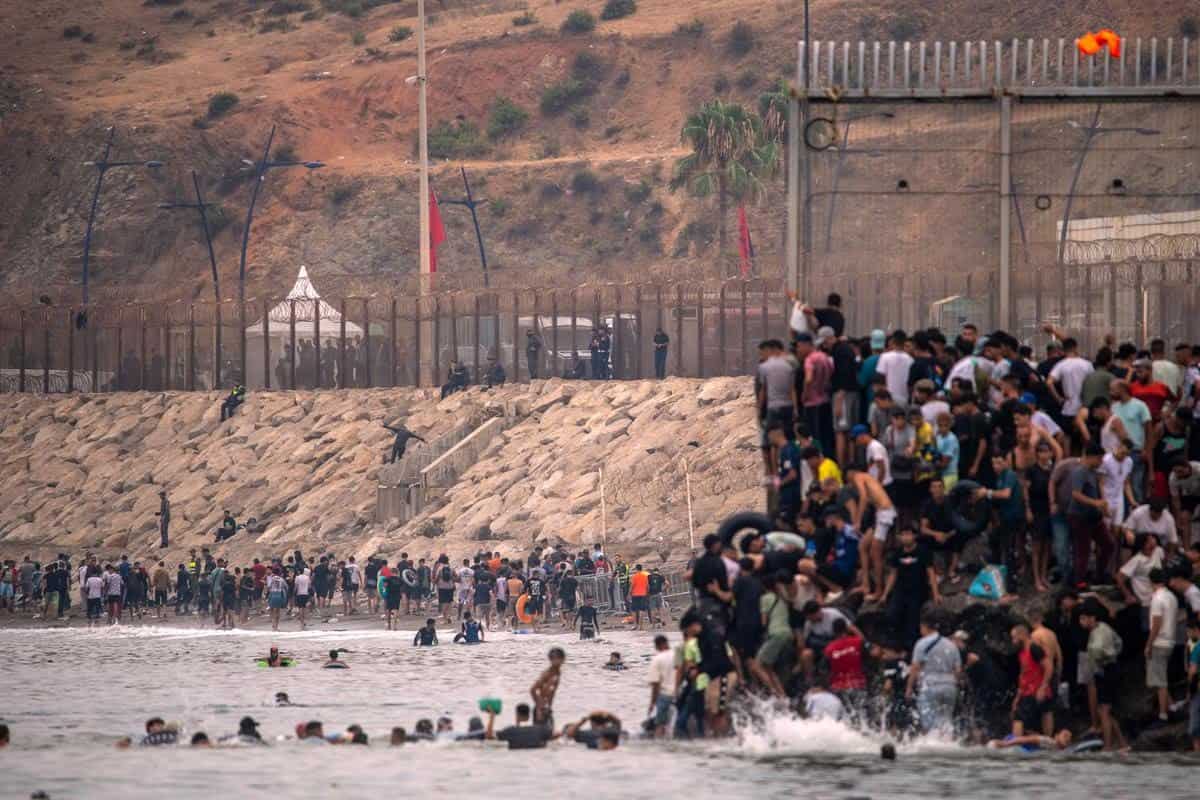
Thousands of migrants from Sub-Saharan Africa, North Africa, and conflict-affected regions attempt to cross these borders every year, either by climbing fences, swimming around barriers, or using smuggling networks.
Major Reasons Behind the Spain–Morocco Border Crisis
1. Migration Pressure
The primary driver of the crisis is irregular migration.
Many migrants leave their home countries due to:
- Poverty
- Unemployment
- Armed conflicts
- Political instability
- Climate-related hardships
For many, reaching Ceuta or Melilla means entering European territory, offering hope for asylum, employment, or a better quality of life.
2. Economic Inequality
The economic gap between Europe and many African countries is significant.
Spain’s GDP per capita is several times higher than Morocco’s, while conditions in many Sub-Saharan African countries are even more challenging. This disparity motivates many people to risk dangerous journeys across deserts and seas.
3. Human Smuggling Networks
Organized criminal groups play a major role in facilitating illegal crossings.
These networks:
- Charge migrants large sums of money.
- Spread misinformation about border conditions.
- Organize mass crossing attempts.
- Exploit vulnerable migrants for profit.
Authorities have repeatedly linked sudden surges in crossings to the activities of these smuggling organizations.
4. Diplomatic Tensions
Migration has often become intertwined with political disagreements.
One of the most notable examples occurred in 2021, when Spain allowed Brahim Ghali, leader of the Polisario Front, to receive medical treatment. Morocco viewed the move as hostile, and border controls around Ceuta were widely reported to have been relaxed temporarily, allowing thousands of migrants to enter.
More recently, analysts have suggested that renewed political disagreements—including issues related to Western Sahara and broader regional diplomacy—may have influenced border dynamics, although the exact causes of recent surges remain under investigation.
5. Western Sahara Dispute
The Western Sahara conflict strongly influences Spain–Morocco relations.
Morocco claims sovereignty over Western Sahara, while the Polisario Front seeks independence for the territory.
Spain’s diplomatic position on this issue has frequently affected relations with Morocco, and disagreements over Western Sahara have sometimes coincided with periods of increased migration pressure.
6. European Union Border Security
Since Ceuta and Melilla are part of Spain, they are also external borders of the European Union.
As a result:
- Spain receives EU funding for border protection.
- Frontex supports broader EU border management.
- European leaders closely monitor developments because instability could affect migration across the continent.
Humanitarian Concerns
Border crossings have resulted in numerous deaths and injuries over the years.
Migrants often face:
- Drowning while attempting sea crossings.
- Injuries from climbing border fences.
- Exposure to extreme weather.
- Violence from criminal groups.
- Long detention periods.
Human rights organizations have repeatedly called for investigations into deaths occurring during attempted crossings and have urged both Spain and Morocco to improve migrant protection.
The 2026 Border Surge
In late July 2026, Ceuta experienced one of its largest-ever migration surges, with tens of thousands of people attempting to cross from Morocco into the Spanish enclave. The sudden influx overwhelmed local authorities, led to dozens of reported deaths, and prompted Spain to reinforce security while Morocco moved to halt further crossings. Many migrants later returned to Morocco, but the episode reignited debate over migration policy, humanitarian responsibilities, and the political relationship between Spain and Morocco. Authorities cited a combination of economic hardship, smuggling networks, and confusion surrounding Spanish legal rulings, while some observers also pointed to ongoing diplomatic tensions.
Challenges Facing Spain and Morocco
Both countries face difficult policy choices:
Spain must balance:
- Border security
- Human rights obligations
- EU migration policy
- Relations with Morocco
Morocco must address:
- Economic development
- Youth unemployment
- Migration management
- Diplomatic negotiations with Spain and the EU
Possible Long-Term Solutions
Experts suggest that reducing future crises will require:
- Stronger cooperation between Spain and Morocco.
- Joint efforts to dismantle human smuggling networks.
- Economic investment in migrant-origin countries.
- Legal migration pathways for workers and asylum seekers.
- Improved humanitarian protection at border crossings.
- Continued diplomatic dialogue over regional disputes.
Conclusion
The Spain–Morocco border crisis is not simply an immigration issue; it is the result of decades of historical disputes, geopolitical rivalry, economic inequality, and humanitarian challenges. Ceuta and Melilla remain strategic flashpoints where European migration policy, African development, and international diplomacy intersect. While security measures may reduce crossings temporarily, lasting stability will likely depend on sustained cooperation between Spain, Morocco, the European Union, and countries of migrant origin to address both the immediate pressures at the border and the deeper causes of migration.