
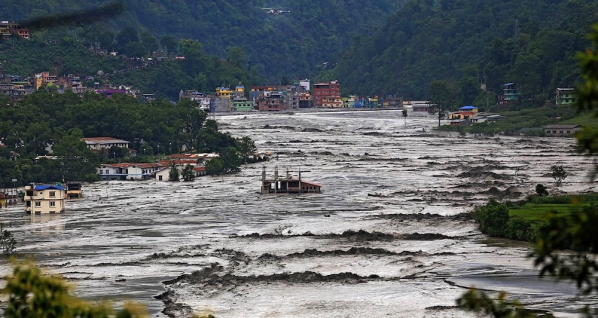
Kathmandu, August 26, 2026: A devastating flash flood swept through Nepal’s northern Rasuwa district near the Tibet border on Wednesday, killing at least 17 people and leaving hundreds of people unaccounted for, including more than 100 Indian nationals. The disaster caused widespread destruction along the Bhotekoshi River, washing away homes, bridges, roads and hydropower infrastructure.
The flooding struck the areas around Timure, Syaphrubesi and Rasuwagadhi, a key Nepal-China border crossing. Authorities said the torrent entered Nepal from the Tibet side and rapidly inundated settlements and infrastructure along the river.
Preliminary assessments indicate that a rockslide or avalanche near the Nepal-Tibet border may have triggered the sudden surge of water. Officials and experts are continuing to investigate the precise cause.
Hundreds of Tourists and Pilgrims Missing
The disaster has raised particular concern over hundreds of travelers heading toward Tibet for the Kailash Mansarovar pilgrimage. Nepalese authorities and tourism agencies reported that nearly 400 pilgrims and travelers were out of contact after the flood hit the border area. A preliminary list included 105 Indian nationals, along with travelers from several other countries.
Rescue teams are working to locate those stranded or missing, but damaged roads, destroyed bridges and difficult Himalayan terrain are complicating the operation.
Major Infrastructure Damage
The flooding has severely damaged Nepal’s transport network. A 42-kilometre road linking Betrawati in Nuwakot with the Rasuwagadhi border crossing was reportedly washed away at multiple locations, with several concrete bridges also destroyed.
Hydropower projects and other infrastructure along the Bhotekoshi River have also suffered major damage. Authorities have warned communities downstream to remain alert as the possibility of further flooding remains.
Nepal’s security forces have launched search-and-rescue operations, while authorities continue assessing the scale of the destruction and attempting to establish contact with missing travelers.
The disaster has once again highlighted the vulnerability of Himalayan communities and vital cross-border infrastructure to sudden floods, landslides and other extreme natural hazards.
Rescue and relief operations remain ongoing, with casualty and missing-person figures expected to change as authorities gain access to isolated areas.