
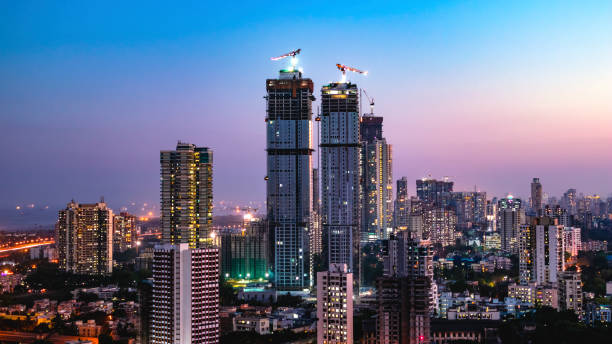
India’s skyline is undergoing a dramatic transformation, with Mumbai and Hyderabad emerging as major centres of high-rise and skyscraper construction. The rapid expansion reflects growing urban populations, rising land prices, expanding business districts and increasing demand for premium residential developments.
According to data from the Council on Tall Buildings and Urban Habitat’s Skyscraper Center, 79 of India’s tallest buildings were listed as under construction in 2026, highlighting the scale of the country’s current vertical-development boom.
Mumbai Leads India’s Skyscraper Boom
Mumbai remains at the heart of India’s supertall ambitions. The city has several major towers either under construction or in development, including projects planned to exceed 300 metres.
The Prestige Sky Tower is listed at approximately 308 metres, while several other Mumbai projects are approaching or exceeding the 300-metre mark.
Mumbai’s limited availability of land is one of the major reasons developers are increasingly building upward rather than outward. High land prices and strong demand for luxury housing have also encouraged the construction of tall residential towers.
Hyderabad Is Rapidly Catching Up
Hyderabad is becoming another important centre of India’s vertical growth. Areas such as Kokapet, Gachibowli, Nanakramguda and Tellapur have experienced a major surge in high-rise development.
Recent reporting indicates that the number of approved skyscraper projects in Hyderabad nearly doubled from around 100 in 2024 to nearly 200 in 2025. The city now has about 1,800 high-rises, making it one of the most significant high-rise markets in South India.
Several Hyderabad projects are also planned at more than 200 metres, including multiple towers in the Candeur Skyline development.
Is India Really Building Skyscrapers Faster Than Any Other Country?
The claim needs some qualification.
India is experiencing one of the world’s most significant high-rise construction booms, but available data does not establish that India is definitively building skyscrapers faster than every other country. In fact, India still has relatively few buildings above 300 metres compared with established skyscraper markets such as China.
A June 2026 report by The Economic Times noted that India had only one completed building above the 300-metre threshold at that time, despite its rapid urbanisation and ambitious plans for taller buildings.
Therefore, the more accurate story is that India is rapidly accelerating its vertical development, rather than definitively surpassing every other country in skyscraper construction.
Why India Is Going Vertical
Several factors are driving the transformation:
- Urbanisation: Millions of people are moving toward major metropolitan areas.
- Limited land: Land scarcity makes vertical development attractive in major cities.
- Rising property values: Tall luxury residential projects can maximise the value of expensive urban land.
- IT and business expansion: Hyderabad and other technology hubs are creating demand for new commercial and residential districts.
- Infrastructure development: New roads, metro networks and business corridors are opening previously undeveloped areas to high-rise construction.
- Changing lifestyles: Premium apartments with views, amenities and integrated facilities are becoming increasingly popular among affluent buyers.
A New Era for Indian Skylines
India’s skyscraper boom represents a major shift in the country’s urban landscape. Mumbai is pushing the boundaries of residential tower heights, while Hyderabad is rapidly developing new high-rise districts.
However, experts also point to challenges including construction costs, infrastructure capacity, regulations, transportation, water supply and urban planning. The Economic Times has highlighted fragmented regulations and infrastructure gaps as obstacles to India’s ambitions for more supertall buildings.
The coming decade could therefore be crucial. If infrastructure and planning keep pace with construction, India’s cities could develop some of Asia’s most distinctive new skylines.
India may not yet be the world’s skyscraper leader—but its cities are clearly entering a new age of vertical growth.