
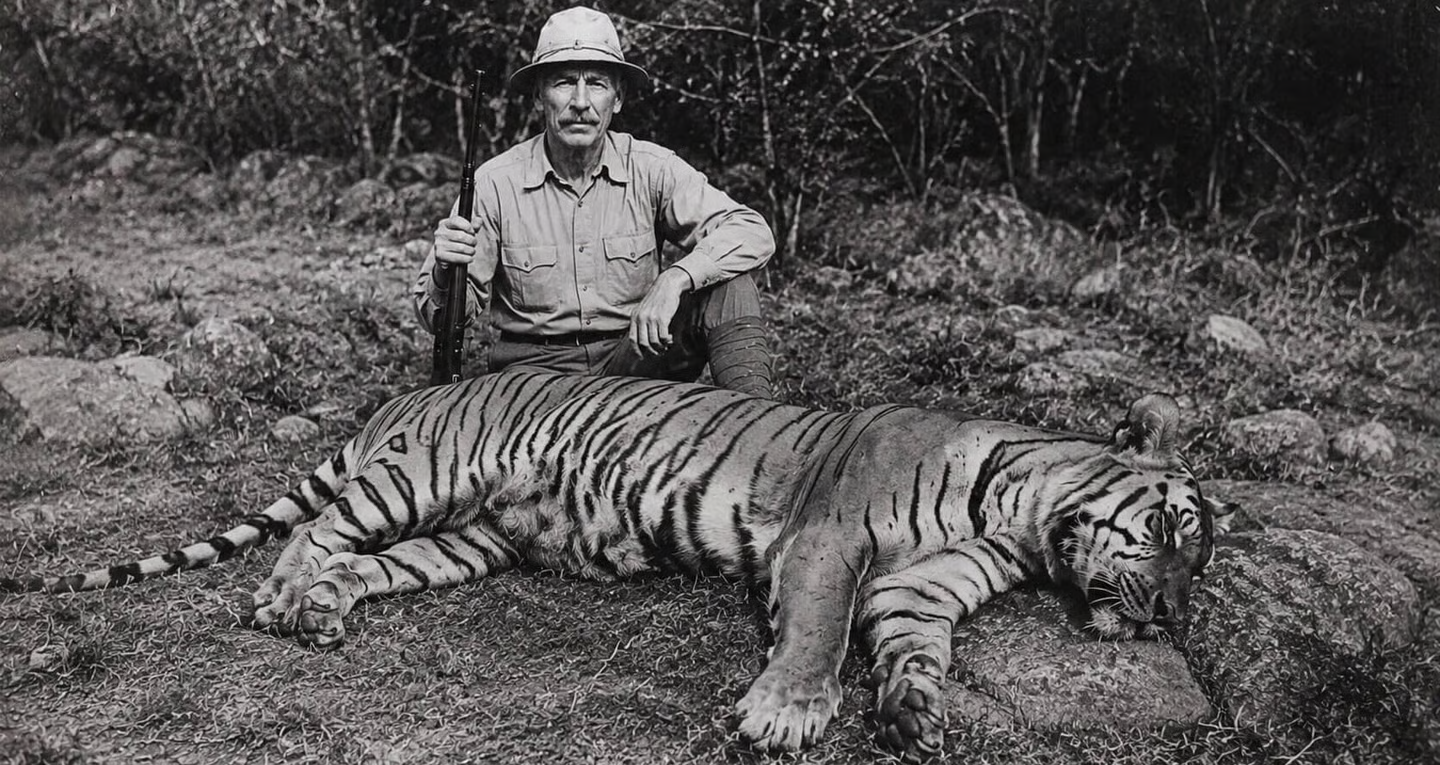
Jim Corbett: The Legendary Hunter Who Became India's Pioneer of Wildlife Conservation
Few names are as closely associated with India’s wildlife heritage as Jim Corbett. Renowned for tracking and eliminating notorious man-eating tigers and leopards during the early 20th century, Corbett’s legacy extends far beyond his reputation as a skilled hunter. Over time, he became one of the country’s earliest and most influential advocates for wildlife conservation.
Born on July 25, 1875, in Nainital, then part of British India, Edward James “Jim” Corbett developed an intimate knowledge of the forests and wildlife of the Himalayan foothills from an early age. His remarkable ability to read animal tracks, understand jungle behavior, and navigate dense forests made him an exceptional tracker.
Hunting Man-Eaters to Protect Communities
During a period when several tigers and leopards turned into man-eaters—often due to injuries or habitat disturbances—Corbett was frequently called upon by local authorities and villagers. Over his career, he is credited with eliminating numerous dangerous predators responsible for hundreds of human deaths.
Among his most famous hunts were the Champawat Tiger, believed to have killed more than 400 people, and the Leopard of Rudraprayag, which terrorized communities for years.
Corbett always emphasized that healthy tigers rarely attack humans without reason. He argued that many man-eaters became dangerous because of injuries, old age, or human interference with their habitat.
From Hunter to Conservationist
As wildlife populations declined, Corbett became increasingly vocal about protecting India’s forests and animals. He encouraged scientific wildlife management, habitat preservation, and public awareness long before conservation became a global movement.
His efforts contributed to the establishment of India’s first national park in 1936, originally named Hailey National Park. It was later renamed Jim Corbett National Park in his honor and remains one of India’s premier tiger reserves.
Literary Legacy
Jim Corbett was also a gifted writer. His books, including:
- Man-Eaters of Kumaon
- The Man-Eating Leopard of Rudraprayag
- My India
- Jungle Lore
- The Temple Tiger and More Man-Eaters of Kumaon
continue to captivate readers with vivid storytelling, deep respect for nature, and fascinating insights into the Indian wilderness.
Lasting Influence
Today, Jim Corbett is remembered not simply as a hunter but as a conservation pioneer who helped change public attitudes toward wildlife. His writings inspired generations of naturalists, photographers, researchers, and conservationists.
Jim Corbett National Park, located in Uttarakhand, attracts thousands of visitors each year and plays a vital role in India’s tiger conservation efforts under Project Tiger.