
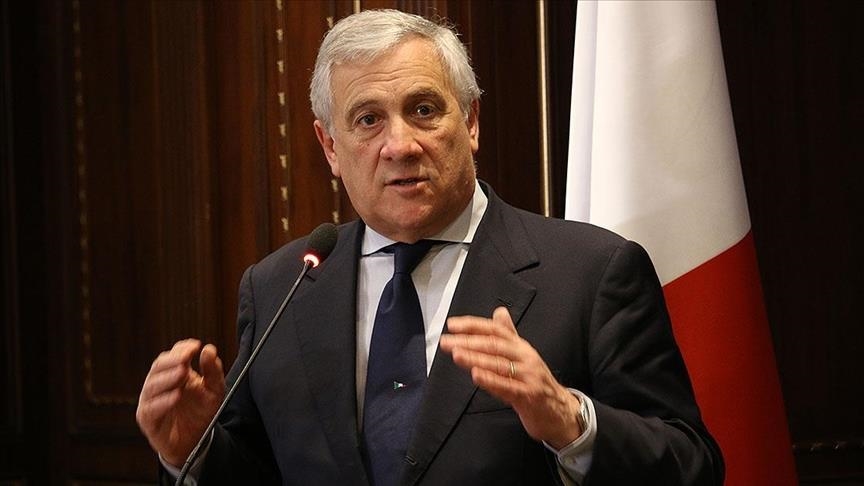
Rome — Italian Deputy Prime Minister and Foreign Minister Antonio Tajani has renewed his call for Italy and Poland to be brought into the inner circle of European powers coordinating on Ukraine, arguing that any lasting settlement with Russia should be shaped by a broader “E5” format rather than the current France-Germany-UK-led grouping.
What Tajani Said
Speaking on the sidelines of an Italy-Norway business forum at the foreign ministry in Rome, Tajani said he would rather see a five-country format that folds in Italy and Poland alongside Britain, France and Germany — the so-called “E3” bloc that has driven much of Europe’s recent diplomatic engagement with Kyiv, Washington and Moscow.
He downplayed Italy’s absence from a London meeting between the E3 leaders and Ukrainian President Volodymyr Zelensky, insisting it was “no big deal” and that Rome remains fully engaged in supporting Ukraine, both through EU channels and on a bilateral basis. Tajani added that Italy intends to play a significant role in eventual peace-building efforts once a settlement takes shape.
His comments were echoed by the German government. Spokesman Stefan Kornelius told reporters that Warsaw and Rome remain closely tied into the broader diplomatic process even when they are not part of a given meeting, describing the E3 as a proven working format for driving progress in a small group — while stressing that this does not exclude other European partners from the wider effort. Berlin, he said, is committed to ensuring coordination and teamwork across the EU rather than a go-it-alone approach.
Context
Tajani’s push is not new. Italy has repeatedly pressed the case for a bigger seat at the table over the past year, pointing to Rome’s roughly €2.5 billion in non-military assistance to Ukraine — covering refugee support, budget assistance and humanitarian aid — as well as its leadership in organizing the Ukraine Recovery Conference.
Italy and Poland have also been coordinating more closely on wider European and Middle East files. Foreign Minister Tajani and his Polish counterpart, Radosław Sikorski, recently agreed the two countries should work together more systematically on major crises — including Ukraine, Iran and Lebanon — and take a stronger, more coordinated leadership role within Europe’s diplomatic response.
Italy and Poland have periodically been included in broader consultations, such as the “Weimar+” ministerial format bringing together France, Germany, Italy, Poland, Spain, the UK and the EU to assess ceasefire and peace-process developments. But the core, leader-level format driving the most sensitive negotiations has generally remained the smaller E3 grouping of Britain, France and Germany.
Why It Matters
The dispute over format is, at its core, a dispute over influence: whichever countries sit in the room when a Ukraine settlement is negotiated will have outsized sway over its terms — including security guarantees, reconstruction financing and Ukraine’s path toward EU membership. Italy, the eurozone’s third-largest economy, and Poland, a frontline NATO state bordering Ukraine with one of Europe’s fastest-growing defense budgets, both argue they have as much stake in the outcome as the traditional E3 powers.
Whether Tajani’s E5 proposal gains traction will likely depend on how the broader peace process with Russia develops in the coming weeks, and on whether France, Germany and the UK are willing to formally widen their core negotiating group.