
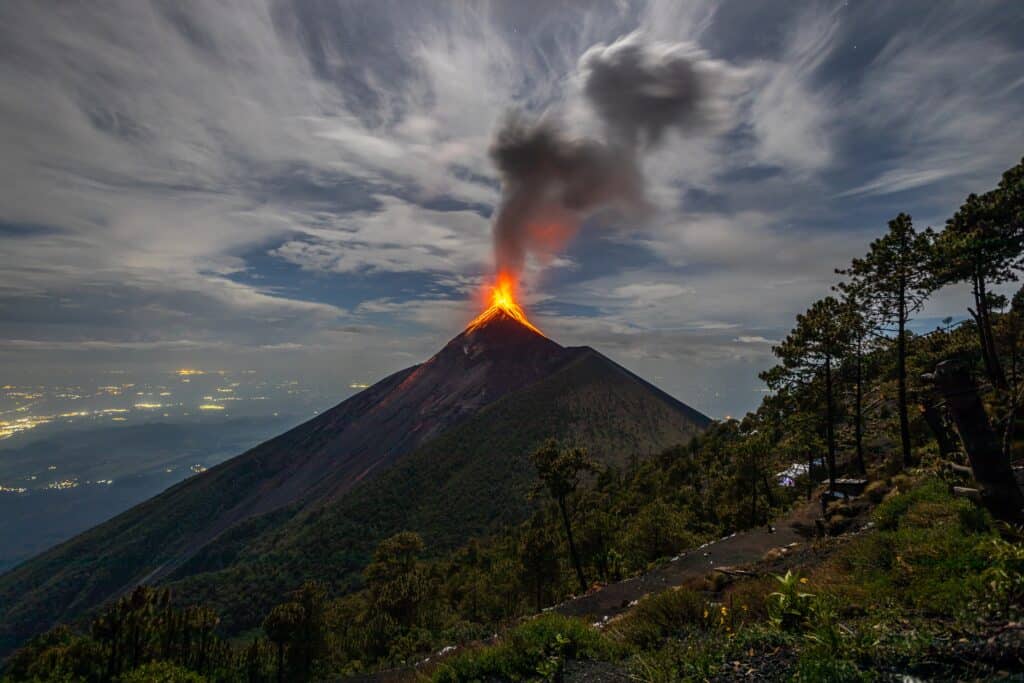
Guatemala City, August 5, 2026 — Guatemalan authorities have evacuated hundreds of residents after the country’s most active volcano, Volcán de Fuego, entered what officials described as a “critical explosive phase,” raising fears of dangerous pyroclastic flows, heavy ashfall, and further volcanic hazards.
The eruption intensified rapidly on Monday, prompting emergency officials to order the precautionary evacuation of communities closest to the volcano. Residents were transported to temporary shelters as ash clouds blanketed surrounding areas and lava flowed down multiple ravines.
According to Guatemala’s National Coordinator for Disaster Reduction (CONRED), the volcano generated powerful explosions accompanied by fast-moving pyroclastic flows—a deadly mixture of superheated gas, volcanic ash, and rock fragments capable of destroying everything in their path. Authorities warned that conditions could deteriorate further if the explosive activity continues.
Emergency Measures Intensified
Emergency responders moved quickly to evacuate families from high-risk zones, while schools in affected districts were closed as a precaution. Officials also imposed restrictions on access to areas surrounding the volcano and advised motorists to avoid highways impacted by falling ash and reduced visibility.
Disaster management teams are continuously monitoring seismic activity and volcanic emissions, urging residents to remain alert and follow evacuation instructions without delay.
Ash Clouds Threaten Nearby Communities
Massive plumes of volcanic ash rose several kilometers into the atmosphere, drifting across nearby towns and agricultural regions. Health authorities advised residents to wear face masks, stay indoors whenever possible, and protect water supplies from ash contamination.
Experts also warned that forecast rainfall could trigger lahars—fast-moving volcanic mudflows capable of sweeping through river valleys and causing significant damage long after the eruption itself.
A Volcano with a Deadly History
Located about 35 kilometers (22 miles) southwest of Guatemala City, Volcán de Fuego is one of Central America’s most active volcanoes. Its frequent eruptions pose a constant threat to nearby communities.
The volcano’s devastating 2018 eruption killed more than 200 people and left hundreds missing after powerful pyroclastic flows engulfed villages with little warning. That tragedy remains one of the deadliest volcanic disasters in Latin America’s recent history and continues to shape emergency preparedness efforts.
Authorities Urge Vigilance
Guatemala has declared an elevated emergency alert as volcanologists continue to monitor the eruption around the clock. Officials say additional evacuations may be ordered if volcanic activity intensifies or changes direction.
So far, no fatalities have been reported from the latest eruption, but authorities stress that the situation remains highly dynamic. Residents living near the volcano have been urged to stay informed through official channels and avoid entering restricted areas until the danger has passed.